VFW Advocacy
-
The VFW Enters 127th Year Continuing the Fight for Veterans
KANSAS CITY, Mo. -On Sept. 29 the Veterans of Foreign Wars (VFW) proudly commemorates VFW Day, marking 127 years of unwavering service to America's veterans, service members, their families and communities. Founded on Sept. 29, 1899, the VFW has stood as the nation's most established major war veterans' service organization, built on the conviction that service to country doesn't end when the uniform comes off.
What began with a small group of Spanish-American War and Philippine Insurrection veterans has grown into a network of more than 1.3 million members of the VFW and its Auxiliary. Today, that network carries forward two enduring commitments: fighting in Washington, D.C., for the benefits veterans have earned and showing up in communities across the country and around the world to give back. For 127 years, the VFW has been a voice for veterans and a force for good. Together we strengthen our communities and honor those who made the ultimate sacrifice.
That advocacy is on full display this year as Congress considers the Take Care of America's Veterans Act (TCAVA), a hastily-constructed veterans' omnibus package that includes a dangerous provision to cut future veterans' benefits. While the VFW has supported many of the bill's provisions in the past, the VFW has strongly and publicly opposed a measure that would offset new spending by cutting disability compensation and reducing VA disability ratings for conditions such as tinnitus and sleep apnea. VA estimates that these changes could cost veterans $57 billion over the next decade and affect as many as 1.5 million future veterans. More than 100 VFW advocates from 31 states converged on Washington this summer and worked to have the bill pulled from the House floor. Then, VFW advocates came to Washington again in the fall, successfully pushing the Major Richard Star Act discharge petition forward. The VFW and its advocates won't give up until Congress strips this offset provision from TCAVA and funds the Major Richard Star Act in full from a source that does not come at veterans' expense.
That same resolve carries into VFW Posts and Auxiliaries nationwide through Still Serving, the organization's year-round reminder that combat boots are not required to serve one's community. In fiscal year 2026 alone, VFW Day of Service brought veterans together for more than 2,570 community service events across all 50 states and 15 countries and territories - a 543% increase in participation since the program began in 2022. From building beds for children in need to preserving historic battlefields and hosting free clinics for military families, veterans are proving daily that their commitment to service continues long after receiving their DD-214.
The VFW's legacy of advocacy - from helping to establish the Department of Veterans Affairs to championing the GI Bill and expanding VA health care - is what fuels today's fight to ensure veterans transition successfully into civilian life, gain timely access to VA care and are never asked to shoulder the cost of their own earned benefits. As the VFW marks this milestone, Posts and Auxiliaries worldwide are honoring VFW Day with ceremonies, open houses and community service projects, reaffirming a mission that has never changed: to stand shoulder-to-shoulder with every generation of America's veterans for the next 127 years and beyond.
-
'Honor the Contract' T-Shirt
Stand for those who stood for our freedom. Honor the contract.
When the uniform comes off, the mission is not over. The Grunt Style "Honor the Contract" T-Shirt is a declaration of loyalty to those who served. This shirt represents accountability, respect and action, because the debt to our veterans does not come with an expiration date.
This shirt is a reminder to push back against legislation and budgets that reduce compensation for veterans. Oppose predatory "claim sharks" who charge veterans for assistance with VA claims. And promote transition assistance programs and mental health resources.
You can support the advocacy initiative by purchasing the "Honor the Contract" T-shirt from the VFW Store.
To shop for other items online, go to vfwstore.org. Need help with an order? Call the MSC at 1.833.839.8387.This article is featured in the 2026 September issue of Checkpoint. If you're a VFW member and don't currently receive the VFW Checkpoint, please contact VFW magazine at magazine@vfw.org. -
'Never Leave Anyone Behind'
While touring Southeast Asia with the Defense POW/MIA Accounting Agency (DPAA)'s Joint Field Activities (JFA) in March and April, VFW Commander-in-Chief Cory Geisler was overcome by a profound sense of compassion.
Geisler recalled every leg of his trip, from Hawaii's Pearl Harbor across the Pacific to Thailand, Laos and Vietnam, where he met brigadier generals, DPAA personnel, foreign dignitaries and diplomats, culminating with a memorial service on April 7.
Held at Bo Trach District, Quang Binh Province, Vietnam, the remembrance ceremony marked the 25th anniversary of an Mi-17 helicopter crash that killed seven Americans and nine Vietnamese during a joint search for missing U.S. service members.
Geisler, then serving as VFW's Senior Vice Commander, was joined by VFW Director of Public Affairs and Strategic Outreach Robert Couture. They sat among a large, solemn crowd of DPAA and U.S. Embassy members, along with representatives from the Vietnamese Missing Persons Agency and the families of those killed in the crash.
"Words can't even begin to describe what it was like to be there," said Geisler, an Iraq War veteran who served with the Army from 2005 to 2012. "It put things in perspective, made me realize that we still have so many Gold Star families searching for that closure, for what happened to their person, if they will ever be found. I can't imagine not knowing."
The experience gave Geisler a quiet admiration for DPAA's mission to account for the more than 80,000 U.S. troops who remain listed as missing in action (MIA) since World War I.
As VFW Commander-in-Chief this year, Geisler is partnering with VFW Auxiliary President Donna Mills to raise awareness and funds for DPAA and its mission to account for every MIA who donned the country's uniform.
"Our goal is to raise money for missions to recover our MIAs, especially with the budget cuts DPAA has recently taken, which not only affect the missions out in the field, but also those where they are going out and gathering evidence," said Geisler, a Gold Legacy Life member of VFW Post 721 in Waukesha, Wisconsin. "These cuts affect all the research and support personnel back in the States. When the budget is cut, you are not replacing those who are lost and are putting more of a burden on those left behind."
In fiscal year 2025, DPAA surpassed its congressional mandate by identifying a record 231 MIAs. The identifications included 165 from World War II, 58 from the Korean War, and eight from the Vietnam War. Among them was the 100th service member identified from remains returned by North Korea in 2018. Despite this success, however, the agency faced an 11 percent budget cut that slashed field operations by 38 percent.
'TIME IS OF THE ESSENCE'
An unwavering ally and advocate for recovery efforts for unaccounted-for troops dating back to 1920, VFW remains adamant about supporting DPAA in its mission. The two organizations have worked closely since DPAA's inception in 2015. Through the JFA, VFW leaders annually participate in excavations across Southeast Asia and visit DPAA offices to assess ways to improve outcomes and strengthen diplomatic ties with countries such as Vietnam."I think about all those families who never got a military funeral, and though they know their person is dead, they don't know the story of what happened," Geisler said. "We still have over 80,000 MIAs unaccounted for, and [the recovery] window gets smaller and smaller every single year, so time is of the essence. That is why this mission is so important."
The process of recovering and identifying remains grows significantly harder with the passage of time, from aging witnesses to the erosion of documents and materials to the inevitable breakdown of organic material due to soil acidity.
Geisler beckons fellow VFW members to continue the organization's longstanding tradition of helping with recovery efforts, which has on numerous occasions yielded war artifacts and the locations of MIAs from both America and foreign countries like Vietnam.
"This mission is by far one of the most important missions for us as veterans, part of our warrior ethos to never leave anyone behind," Geisler said. "It's important that we remember there are places like DPAA that help bring our MIAs home, and I encourage you to visit DPAA and see if there is a way you might be able to help sponsor bringing someone home."
VFW and the DPAA encourage the families of those who have gone missing to provide DNA samples to help in the recovery efforts and to help find an accurate match. The two groups also urge service members to share their recollections of events to help further pinpoint the story of what happened to unaccounted-for troops whose remains have yet to be found.
'WHAT ARE YOU GOING TO DO TO CHIP IN?'
Another crucial part of Geisler's mission is to help publicize the important work of the DPAA and offer hope to the families still searching for answers that will finally bring their loved ones home.In tune with today's sociopolitical climate, Geisler understands the importance of constant, unrelenting public advocacy that refuses to drown in the rip tides of media cycles.
"When someone is identified and brought home, VFW and other veteran organizations make a big deal about it," Geisler said. "We show up in droves, but that is about it. The general public doesn't always see that, so they don't understand the importance of bringing our MIAs home."
Geisler also encourages members to advocate on behalf of DPAA to their lawmakers and hold them accountable for every measure of support.
"This is a good opportunity for Congress to see that the VFW, representing millions of veterans and their families, cares," Geisler said. "We need to send them a message that it is not okay to forget our fallen who have not been recovered. We want Congress to know that we care. We want to challenge them. What are you going to do to chip in?"
This article is featured in the 2026 September/October issue of VFW magazine, and was written by Ismael Rodriguez Jr., associate editor for VFW magazine.
-
VFW Action Alert: One More Signature Needed for the Major Richard Star Act
The Major Richard Star Act is now one signature away from an important breakthrough in the House of Representatives.
Discharge Petition No. 22 has reached 217 signatures. It needs 218. The petition would help clear a path for the House to consider H.R. 2102, the Major Richard Star Act, as a standalone bill.
Thousands of combat-injured veterans have waited long enough for Congress to end the unfair offset that prevents them from receiving both the military retirement pay and VA disability compensation they earned.
They need your help right now.
With the petition just one signature away from 218, every message matters. Call or email your representative today and tell them veterans are counting on their support.
TAKE ACTION TODAY
When you take action, your message will reflect where your representative is in the process and what we need them to do next. Depending on what your representative has already done, your message will either:
- Thank them for signing the discharge petition and ask them to keep working to pass the Major Richard Star Act, or
- Ask them to sign the petition since they already cosponsored the Major Richard Star Act, or
- Ask them to cosponsor H.R. 2102 and sign the discharge petition if they have not yet done either.
One more signature gets the petition to 218.
Take action today and help move the clean Major Richard Star Act forward.
-
'Why Did Justice Take So Long?'
VFW leaders stood in solidarity with Camp Lejeune veterans and their families during a two-day Capitol Hill rally in June, calling for congressional action on H.R. 4145,the Ensuring Justice for Camp Lejeune Victims Act of 2025.
VFW General Counsel John Muckelbauer was among the veterans who shared their stories, speaking on behalf of his brother, Matt, a fellow Marine who died from a rare case of non-Hodgkin's lymphoma linked to exposure to toxic water while stationed at Camp Lejeune.
"Like so many families here today," Muckelbauer said, "we were left wondering if his service contributed to his illness. Could this have been prevented? And why did justice take so long?"
Muckelbauer's testimony highlighted the human toll of decades of contamination and the VFW's urgent call for justice. He was joined by VFW Washington Office Executive Director Ryan Gallucci and National Legislative Committee Chairman Jason Johns, who shared their insights and experiences to further amplify the voices of Camp Lejeune veterans and their families.
The passage of the Honoring Our PACT Act in 2022 included a provision known as the Camp Lejeune Justice Act (CLJA). The CLJA allows veterans, family members and contractors suffering
from the effects of toxic exposure to contaminated water at Camp Lejeune, North Carolina, to file lawsuits for compensation.Eligible veterans and civilians were those who served at Camp Lejeune in North Carolina between Aug. 1, 1953, and Dec. 31, 1987.
There are currently more than 400,000 pending claims with the Department of the Navy. Despite the overwhelming number, not a single case has gone to trial while the Department of Justice litigates against victims.
To correct the record and ensure victims have access to appropriate justice, the Ensuring Justice for Camp Lejeune Victims Act of 2025 would make technical corrections to the law and give swifter relief to victims by:
- Clearly providing for jury trials, not just bench trials.
- Expressly stating that victims must show general causation.
- Permitting cases to be heard in any federal court in North Carolina or South Carolina.
- Capping attorney fees at 20 percent for settlements and 25 percent for trials.
This article is featured in the 2026 September/October issue of VFW magazine, and was written by Ismael Rodriguez Jr., associate editor for VFW magazine.
- You are here:
-
Home

-
News Feeds
-
Veterans of Foregin Wars
- VFW Advocacy
Subscribe to Newsletter
Send an email to the Post to subscribe to the newsletter. You will receive it via email and no longer receive a copy in the mail. Note: If you do not subscribe, you will not continue to receive the newsletter by mail.
Email: newsletter@vfw9596.org or VFW9596Newsletter@gmail.com
We appreciate any comments or suggestions you have regarding the website and the Post. Email the commander at commander@vfw9596.org with comments about the Post.
Email comments about the web site to the webmaster at webmaster@vfw9596.org.
Please click the link below to view the current Newsletter and associated information on Google Drive:
 |
 |
|
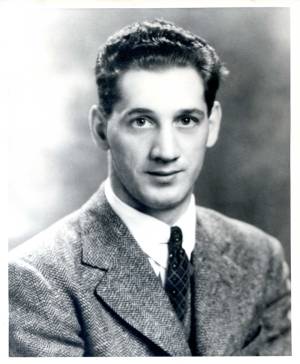
| Cpl. Norbert F. Simon 1918– 1944 United States Army 4th Infantry Division Rolling Four (4" Mobile Howitzers) Omaha Beach |
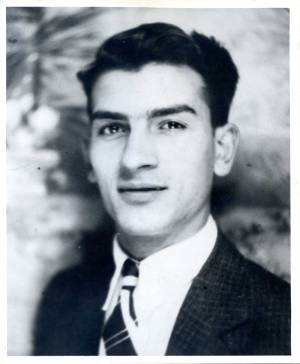
Pvt Michael S. Parise |